Book Appointment


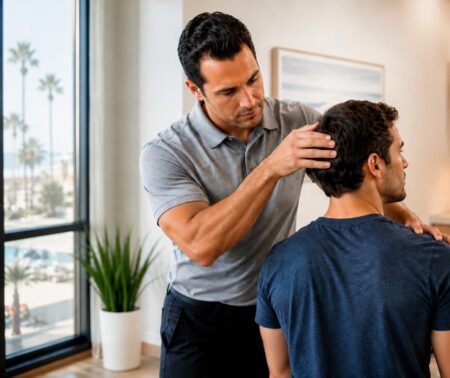
If you’re dealing with pain, stiffness, or recurring muscle tightness, both chiropractic care and massage therapy may sound like similar solutions. They’re both hands-on approaches, and both can help you feel better in the short term. They can seem similar at first glance; both involve hands-on treatment and can help you feel better. But chiropractic massage, manual therapy, and traditional massage are not the same, and understanding the differences can help you choose the treatment that’s most effective for your specific condition.
Below, we’ll break down how each approach works, what problems they’re best at solving, and when it makes sense to choose one or combine both.
What Is Chiropractic Manual Therapy?

Chiropractic manual therapy is a structured, biomechanical approach that focuses on how your joints, spine, muscles, and nervous system work together. It is typically used to restore proper movement, reduce pain, and improve physical function.
Dr Roy Nissim offers chiropractic care that forms part of a broader musculoskeletal approach, including assessment, movement correction, and rehabilitation strategies.
Chiropractic manual therapy may include:
- Spinal and joint adjustments: Precise, controlled movements to restore mobility to restricted joints in the spine, hips, shoulders, knees, and more.
- Joint mobilization: Gentle, repeated movements to improve range of motion without the “crack” or “pop” some people associate with adjustments.
- Soft tissue techniques: Such as myofascial release, trigger point work, or instrument-assisted techniques to address tight or overworked muscles and fascia.
- Neuromuscular re-education: Hands-on techniques and corrective exercises to retrain how your body moves, stabilizes, and loads during daily and sports activities.
Additional advanced soft tissue and rehab tools may include technologies such as instrument-assisted therapies used in clinical rehabilitation settings.
The goal of chiropractic manual therapy:
Rather than only easing tension, it aims to:
- Improve joint function and alignment
- Reduce nerve irritation and movement restrictions
- Correct faulty movement patterns
- Address the underlying cause of pain
What Is Traditional Massage Therapy?
Traditional massage therapy focuses primarily on muscle tissue and relaxation techniques. It is widely used for stress relief, general muscle soreness, and short-term recovery support.
Common types of massage include:
- Deep tissue massage: Slower, deeper pressure aimed at releasing chronic muscle tension.
- Sports massage: Often used before or after activity to support recovery, flexibility, and performance.
- Swedish massage: Long, flowing strokes for general relaxation and stress reduction.
- Prenatal or therapeutic massage: Tailored to specific populations or comfort needs.
Chiropractic Massage is highly effective at:
- Reducing stress and muscle tension
- Improving circulation and lymphatic flow
- Supporting recovery after workouts
- Providing a sense of overall relaxation and well-being
While massage can help with pain, it typically does so by relieving muscle tightness and improving blood flow, rather than by correcting joint mechanics or nervous system dysfunction.
Key Differences Between Chiropractic Manual Therapy and Massage

Although both involve hands-on treatment, their clinical focus is very different.
1. Treatment Focus
Chiropractic Manual Therapy
- Focuses on joints, spine, and nervous system function
- Targets movement dysfunction and biomechanical imbalance
- Looks at how the whole body system contributes to pain
Traditional Massage
- Focuses mainly on muscles and soft tissue
- Addresses tension, tightness, and soreness
- Less emphasis on joint mechanics or movement correction
2. Treatment Goals
Chiropractic Manual Therapy Goals
- Restore joint mobility and function
- Improve movement efficiency and posture
- Reduce nerve-related pain patterns
- Address the root cause of recurring issues
- Support long-term physical resilience
These principles are also relevant when comparing chiropractic care and physical therapy.
Massage Therapy Goals
- Relax tight muscles
- Reduce stress and fatigue
- Improve short-term flexibility
- Promote general wellbeing
- Support recovery after activity
3. Techniques Used
Chiropractic Manual Therapy Techniques
- High-velocity low-amplitude (HVLA) adjustments
- Joint mobilization
- Myofascial release and soft tissue manipulation
- Trigger point therapy
- Assisted stretching and movement correction
- Rehabilitation exercises
Traditional Massage Techniques
- Effleurage (long, gliding strokes)
- Petrissage (kneading and lifting of muscles)
- Friction and cross-fiber work
- Compressions and stretching
- Deep tissue pressure is applied to the muscle layers
Both use hands-on pressure, but chiropractic work is usually more precise and joint-specific, while massage is broader and muscle-focused.
Which Is Better for Pain Relief?
The answer depends entirely on the source of your pain.
Chiropractic manual therapy is frequently more effective when pain is related to:
- Joint dysfunction or misalignment: Such as a stiff neck, locked mid-back, or restricted hip.
- Nerve irritation: Sciatica, radiating arm or leg pain, or numbness/tingling often involves joint and nerve components.
- Chronic or recurrent pain patterns: Low back pain that keeps “coming back,” shoulder pain with overhead movement, or knee pain during running or squatting.
- Biomechanical issues: Poor posture, movement imbalances, or compensation patterns from old injuries.
- Sports and performance injuries: Overuse injuries, tendon irritation, and performance limitations tied to mechanics.
In these cases, unlocking joints, normalizing movement, and calming irritated nerves can produce deeper, longer-lasting relief than muscle work alone. Dr Roy Nissim uses a combination of assessment and treatment strategies to identify these underlying causes.
When Traditional Massage May Be Enough
Massage therapy may be a great first choice when:
- You’re mainly dealing with muscle tension and stress, especially in the neck, shoulders, and back.
- You feel generally tight or sore from workouts, long hours at a desk, or stress, but don’t have sharp or localized joint pain.
- You’re seeking relaxation, stress relief, and better sleep, as well as a mental “reset.”
- You want supportive care between more targeted treatments.
Massage excels at creating a relaxed, low-stress state and easing muscular tension, which can indirectly help with pain and overall well-being.
Can Chiropractic and Massage Be Combined?

In many cases, this combination produces the best outcomes.
When used together, they can:
- Improve muscle flexibility before joint treatment
- Make adjustments more comfortable
- Support faster recovery from injury
- Maintain long-term results more effectively
Clinically, this combined approach is often part of a broader rehabilitation plan that may also include movement retraining and targeted therapy tools available in modern musculoskeletal care.
How to Decide What’s Right for You
Ask yourself:
- Is my pain sharp or linked to movement?
→ Chiropractic manual therapy may be more appropriate - Is my pain mostly tension or stress-related?
→ Massage may be enough - Do I have recurring or long-term issues?
→ A chiropractic assessment is recommended - Do I want short-term relief or long-term correction?
→ Chiropractic care focuses more on long-term change
If unsure, a professional evaluation at a musculoskeletal-focused clinic, such as Dr Roy Nissim, can help determine the most effective path forward.
Are you ready for the right solution?
Chiropractic manual therapy and traditional massage are not competing treatments. They are complementary approaches with different strengths.
- Chiropractic manual therapy focuses on joints, movement, and nervous system function to address the root cause of pain.
- Massage therapy focuses on muscles and soft tissue to relieve tension and promote relaxation.
The best results often come from combining both in a structured, personalised care plan tailored to your body and goals, as used by Dr Roy Nissim.
If you’re experiencing ongoing pain, stiffness, or recurring muscle tightness, contact us today to discuss your symptoms and find the right treatment approach for you.