Book Appointment

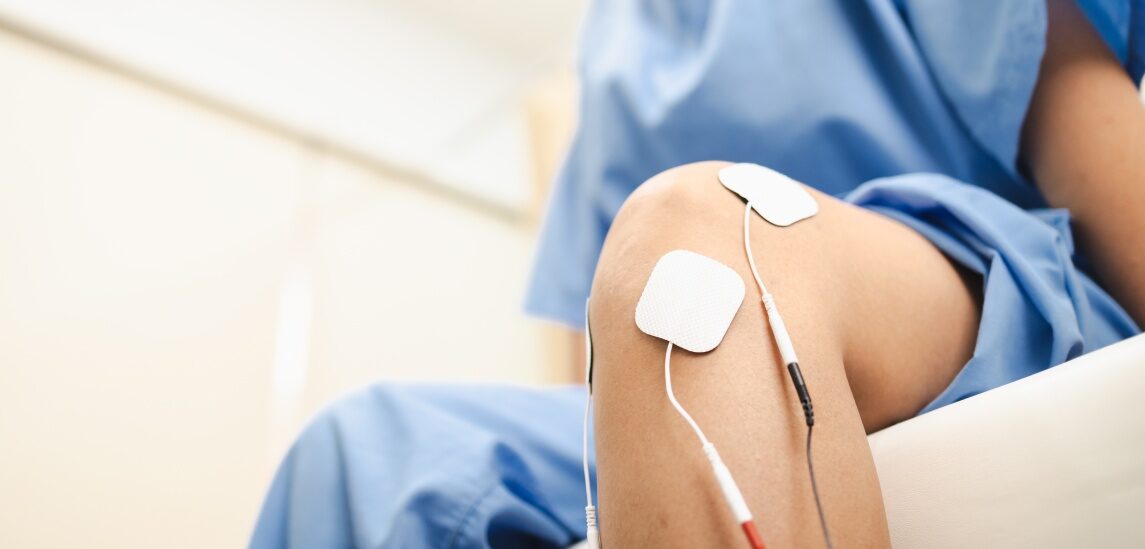
Knee replacement surgery repairs the joint, but it doesn’t automatically restore the way your body moves around it.
One of the biggest factors in how well you get back to your life after a total knee replacement is how quickly you can reactivate your quadriceps. Surgery interrupts the signal between your nervous system and that muscle for many patients. This interrupted signal reflects an underlying dysfunction in how the muscle is being activated. Identifying and correcting that dysfunction, rather than simply waiting for it to resolve on its own, is central to how Dr. Roy Nissim approaches recovery.
Through a combination of chiropractic care, functional movement correction, progressive rehab exercise, and Neubie therapy, Dr. Roy helps knee replacement patients rebuild strength and mobility as an active, guided process. Here’s how it works, what the research supports, and what you can expect.
What Is Neubie Therapy?
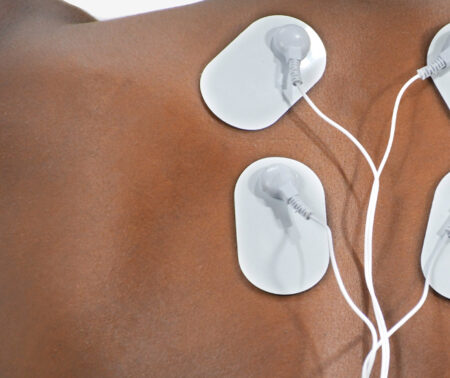
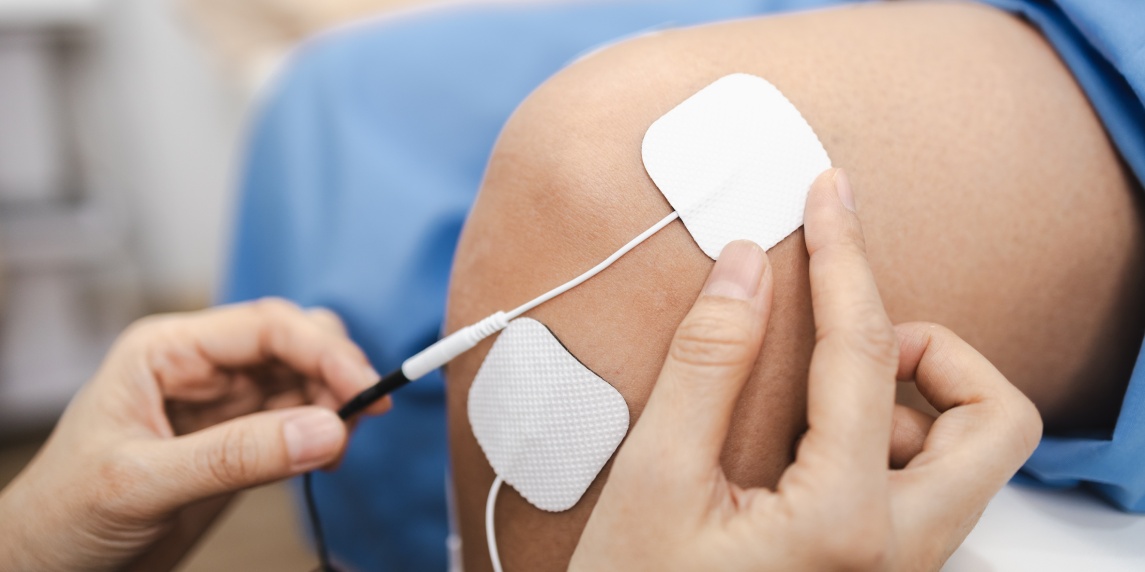
Neubie stands for “Neuro-Bio-Electric.” It’s a surface-electrode device that delivers pulsed direct current through electrode pads placed on the skin, which puts it in the same general family as more familiar devices like TENS units, though it uses a different type of current and protocol.
The FDA lists Neubie under the same broad device classification as conventional muscle stimulators. It is a Class II powered muscle stimulator under 21 CFR § 890.5850. Because it can be run at higher intensities than many home TENS units, Neubie’s manufacturer states that it’s intended to be used by, or under the supervision of, a licensed practitioner rather than sold for unsupervised home use.
Why People Ask About Neubie for Knee Replacement Recovery
Interest in Neubie after knee replacement tends to come from a few directions:
- It’s widely used in sports medicine and performance-training settings, so many patients have seen it used by athletes or heard about it from a trainer.
- Neubie’s manufacturer markets the device broadly for “rehabilitation from pain, injury, or surgery.”
- Patients recovering from surgery are often looking for a way to support muscle reactivation without relying on medication.
Why Quad Activation Is the Real Work of Knee Replacement Recovery
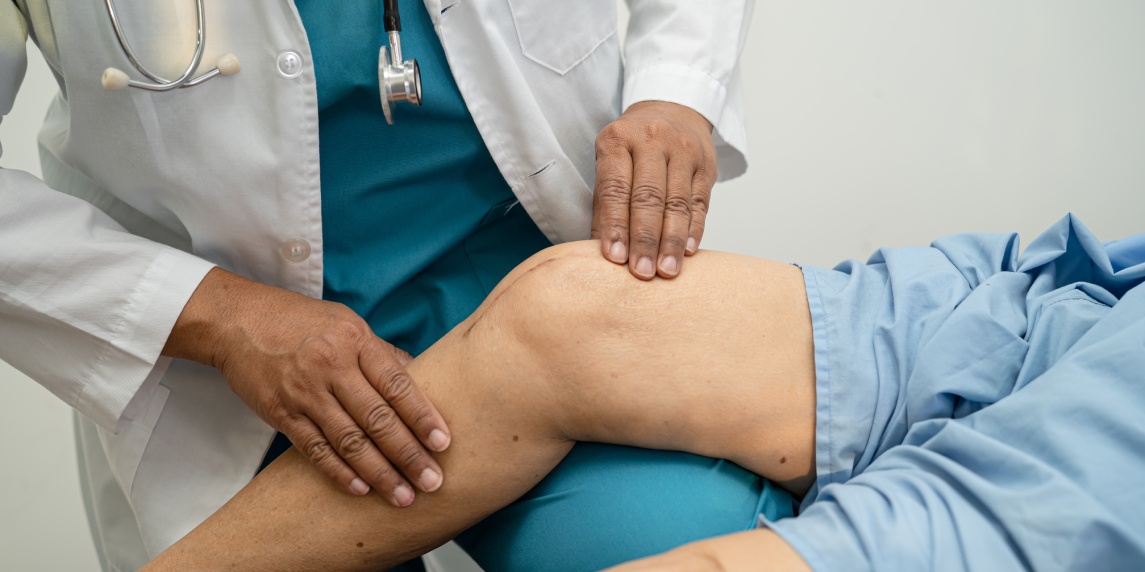
Knee Pain usually eases after the replacement more quickly than strength returns, and while that pattern is common, it isn’t something to simply wait out.
Why This Happens
Surgery interrupts the signal between your nervous system and your quadriceps for many patients. This interruption is consistently identified as a barrier to strength and function after knee replacement.
Rebuilding that activation is a central focus of physical therapist management guidelines for knee replacement recovery, because quad strength is directly tied to:
- Gait quality
- Stair performance
- How confident do you feel with your new knee
What the Research on Electrical Stimulation Shows
Electrical muscle stimulation, as a category of care, has documented support beyond strength alone:
- A 2021 meta-analysis of nine randomized trials in 691 knee replacement patients found favorable pain and function outcomes alongside strength gains, using conventional stimulation devices
- A randomized trial that began stimulation just 48 hours after surgery, also using a conventional device, found measurable improvements in active knee-extension range of motion within the first few weeks
These results are specific to that older, more widely studied form of stimulation. Later in this article, we’ll draw a clear line between what’s proven for that category and what’s proven for Neubie specifically, because they’re not the same evidence.
How Dr. Roy Builds a Knee Replacement Recovery Plan
Every recovery plan starts with a comprehensive movement assessment. From there, Dr. Roy combines several approaches to reduce pain, rebuild activation, and restore mobility together:
- Progressive rehabilitation exercise to reactivate and strengthen the quadriceps from the earliest safe point in your recovery
- Functional Movement assessment and correction to catch the compensations that often develop in the hip, ankle, and opposite leg while you protect the surgical knee
- Chiropractic care and manual therapy to keep the rest of your body moving well while your knee heals, and to support pain relief without relying on medication
- Neubie therapy, can be introduced at the right point in your recovery to support muscle activation, neuromuscular re-education, and rehabilitation exercises. Available through Dr. Roy Nissim’s practices serving Neubie in Santa Monica and Neubie in Thousand Oaks, this therapy can complement a personalized treatment plan designed to improve movement, restore function, and support recovery.
Every one of these pieces exists to serve the same standard Dr. Roy applies to every patient: identify the pain, correct the dysfunction, reinforce the movement, addressing the whole movement pattern around the knee rather than the joint in isolation.
What to Expect From Care
Whether Neubie is part of your plan or not, every knee replacement recovery program at our practice is:
- Personalized to your surgery, your timeline, and your goals
- Root-cause focused, addressing the neuromuscular dysfunction behind persistent weakness, not just the pain
- Progressive and measurable, adjusting as your strength, mobility, and comfort improve
- Integrated with your surgeon’s post-operative protocol and any restrictions they’ve set
Talk to Your Surgical Team First
Any use of Neubie, or any electrical stimulation, after knee replacement should be cleared with your orthopedic surgeon before it’s introduced, and it should never be placed near the incision or irritated skin.
Contact your surgical team right away if you notice any of the following:
- New or worsening drainage
- Spreading redness
- Fever
- Significant calf swelling
- Chest symptoms or sudden shortness of breath
These are signs that need medical evaluation, not something to work through with any at-home or in-clinic modality.
The Research So Far
Patients deserve a clear answer about what’s proven and what’s still developing. Here is where things currently stand.
What’s Well-Established
Electrical stimulation, as a category, has support as a rehab adjunct after knee replacement:
- The American Physical Therapy Association’s clinical practice guideline gives a moderate-strength recommendation for using conventional neuromuscular electrical stimulation (NMES) to improve quadriceps strength and gait after surgery, reaffirmed in the 2026 guideline revision, as part of a broader supervised PT program
- The meta-analysis of nine randomized trials in 691 patients mentioned above found NMES improved quad strength recovery compared to rehab alone, though not every individual outcome reached the threshold considered a dramatic real-world difference
- The trial starting NMES 48 hours after surgery showed measurably better strength, function, and range of motion by 3.5 weeks
Where the Evidence Is Still Developing
Those studies used conventional NMES devices, not Neubie’s pulsed direct-current system. Here’s the distinction worth understanding:
- Neubie is a legitimately FDA-listed Class II powered muscle stimulator, in the same broad device category as conventional NMES. That classification means it’s legally marketed and falls under general indications for that category, including muscle re-education, prevention of disuse atrophy, and range-of-motion maintenance.
- That classification does not mean the FDA has reviewed or approved Neubie for knee replacement recovery specifically, and it doesn’t mean the pain, strength, and mobility results described above transfer to Neubie.
- At the time of writing, no published clinical trial has tested Neubie specifically in knee replacement patients.
- The only published Neubie research comes from two small studies in healthy, resistance-trained adults, one comparing it to traditional strength training. Both show it can work well as a low-load exercise tool in that population, but neither demonstrates its effectiveness in patients recovering from surgery.
Dr. Roy uses Neubie as a supervised adjunct to established rehabilitation, not a stand-in for it, and updates this approach as new research becomes available. If you want to talk through whether it’s a fit for your specific recovery, that’s exactly what your consultation is for.
Ready to Get Back to Full Strength?
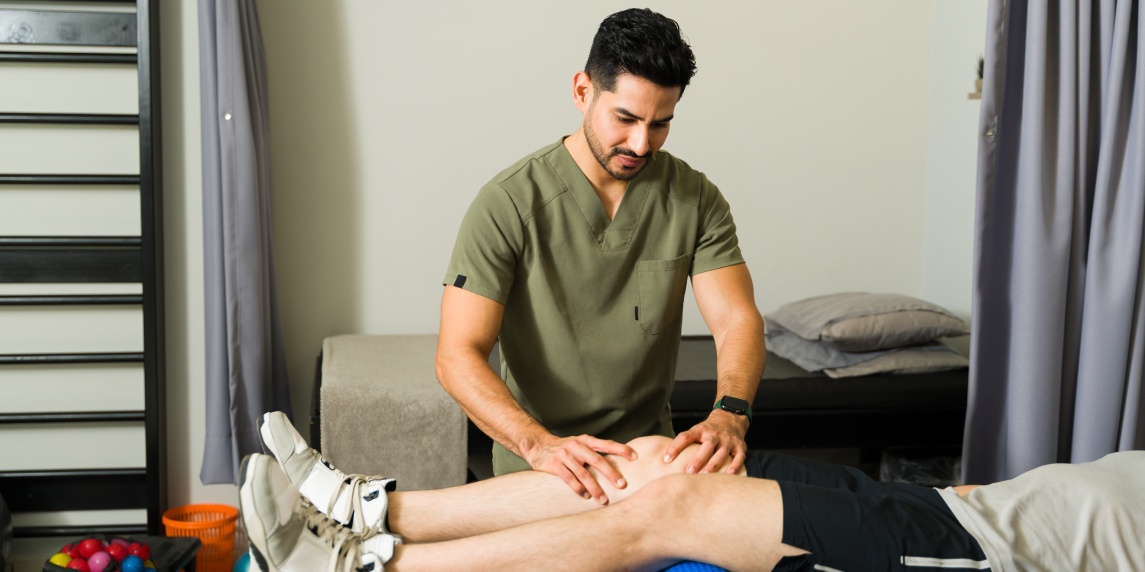
If you’re preparing for knee replacement surgery or already recovering, contact us today to schedule a personalized assessment.
Can’t make it to the clinic due to mobility limits after surgery? Our concierge chiropractor brings personalized care directly to your California home, so you can continue your recovery without the added strain of travel.
Dr. Roy Nissim, DC, MS
Dr. Roy Nissim attended the University of Arizona, where he earned a Bachelor of Science degree in General Biology with minors in Chemistry and Athletic Coaching. His graduate work was completed at Cleveland Chiropractic College in Los Angeles, California, where he was actively involved in the Sports Council and graduated Cum Laude.
As a board-certified chiropractor and certified practitioner in Active Release Techniques® (ART®), Dr. Roy Nissim is dedicated to helping individuals reach an optimum level of health and fitness through personalized treatment specifically tailored to one’s activity level and needs. By employing ART® in conjunction with traditional chiropractic techniques and exercise rehabilitation, Dr. Roy has successfully treated acute and repetitive strain injuries in half the time of more traditional therapy methods.
Electrical Stimulation After Knee Replacement: What’s Actually Been Studied
When comparing conventional NMES with Neubie after total knee arthroplasty (TKA), it is important to distinguish between what has been directly studied in TKA patients and what is supported by research in other populations. Conventional NMES has a larger body of TKA-specific evidence, while Neubie is a newer approach with more limited published research in this specific patient population.
| Conventional NMES | Neubie | |
| Guideline-recommended for TKA recovery | Yes — moderate-strength recommendation | Not yet established |
| Tested in randomized trials of TKA patients | Yes — 691 patients across 9 RCTs | Not identified in published research |
| Tested in healthy adults only | — | Yes — 2 small studies |
| FDA device category | Class II powered muscle stimulator | Class II powered muscle stimulator (same source) |
Note: No dollar figures, session counts, or outcome percentages specific to Neubie + knee replacement are included because no such data currently exist in published research.