Book Appointment


Lower back pain has become one of the most common physical complaints among adults in the United States. Nearly 40% of people will experience lower back pain at some point in their lives, and it continues to be one of the leading causes of missed workdays and reduced productivity. For many people, the discomfort goes far beyond occasional soreness. Persistent lower back pain affects exercise routines, sleep quality, mobility, concentration, and day-to-day movement.
What often gets overlooked is how lower back dysfunction develops in the first place. In many cases, the problem is not tied to one dramatic injury. Instead, it builds gradually through repetitive stress, poor movement mechanics, prolonged sitting, muscular imbalance, and spinal dysfunction. Over time, the body compensates for these restrictions, creating more tension, inflammation, and instability throughout the kinetic chain.
This is where chiropractic care for lower back pain becomes different from conventional symptom-based treatment. Rather than masking discomfort with medication, chiropractic treatment focuses on correcting the mechanical dysfunction responsible for the pain in the first place.
Why Lower Back Pain Continues to Return

Lower back pain rarely exists in isolation. The spine, hips, core, and surrounding soft tissue all work together to support movement and stability. When one area loses mobility or function, surrounding muscles and joints begin compensating.
Several common factors contribute to chronic lower back dysfunction:
- Muscle strains caused by repetitive overuse
- Poor posture while sitting or lifting
- Herniated or degenerative discs
- Spinal misalignment
- Restricted joint mobility
- Sedentary lifestyle habits
- Inflammation around nerves and soft tissue
- Trauma from accidents or falls
The issue is not simply inflammation or discomfort. The real problem is often faulty biomechanics and restricted movement patterns that continue placing stress on the lower spine. Understanding these mechanical contributors helps explain why symptoms continue to return when the underlying dysfunction is never fully corrected.
Common Mechanical Contributors to Lower Back Pain
| Contributing Factor | How It Affects the Body |
| Poor posture | Increases pressure on spinal discs and joints |
| Prolonged sitting | Weakens stabilizing muscles and limits mobility |
| Spinal misalignment | Creates uneven stress and nerve irritation |
| Muscle imbalance | Alters movement mechanics and compensation patterns |
| Repetitive strain | Causes chronic tension and inflammation |
| Disc dysfunction | Reduces shock absorption and spinal support |
Without correcting these underlying mechanical issues, pain tends to return repeatedly, even after temporary relief methods.
The Chiropractic Approach to Lower Back Pain
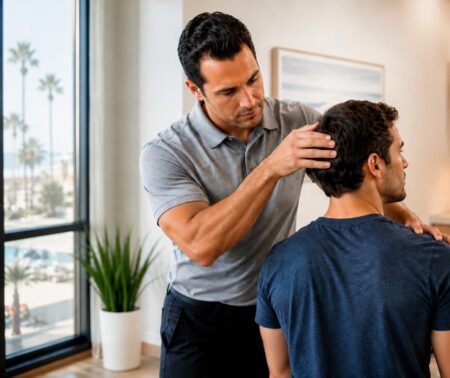
Chiropractic care for lower back pain focuses on restoring proper function rather than suppressing symptoms. The goal is to improve spinal alignment, reduce nerve irritation, restore mobility, and reinforce healthier movement patterns.
At Dr. Roy Nissim Chiropractic & Sports Medicine, treatment begins by identifying the root cause of dysfunction. This performance-focused approach combines chiropractic adjustments, soft tissue therapy, movement correction, and advanced recovery therapies to help patients move better and recover faster.
Instead of relying on medication, treatment targets the source of mechanical stress directly.
How Chiropractic Adjustments Reduce Lower Back Pain

Spinal adjustments are one of the core components of chiropractic care for lower back pain. When vertebrae lose proper alignment or mobility, surrounding muscles tighten to protect the area. This creates tension, stiffness, restricted movement, and nerve irritation.
Precise chiropractic adjustments help:
- Restore joint mobility
- Reduce nerve compression
- Improve spinal alignment
- Decrease muscular tension
- Improve range of motion
- Reduce inflammation
When spinal mechanics improve, the body moves more efficiently and experiences less strain during everyday activity.
Many patients notice improvements not only in pain levels but also in flexibility, posture, movement quality, and overall function.
Advanced Therapies That Support Recovery
Effective chiropractic care for lower back pain often involves more than spinal manipulation alone. Dr. Roy Nissim integrates evidence-based therapies that target both joint dysfunction and soft tissue restriction.
Treatment Techniques Commonly Used
| Therapy | Purpose |
| Chiropractic adjustments | Restore spinal alignment and mobility |
| Active Release Techniques® (ART®) | Break down scar tissue and muscle adhesions |
| Functional movement therapy | Correct dysfunctional movement patterns |
| Shockwave Therapy | Stimulate healing and tissue regeneration |
| PEMF therapy | Improve cellular recovery and reduce inflammation |
| Manual soft tissue therapy | Improve mobility and reduce tension |
This integrated approach helps accelerate recovery while improving long-term function.
Why Soft Tissue Treatment Matters
Lower back pain often involves more than the spine itself. Tight hip flexors, restricted hamstrings, weak glutes, and overactive lumbar muscles can all contribute to chronic stress on the lower back.
Soft tissue therapies like ART® target these restrictions directly by:
- Improving tissue pliability
- Restoring muscle function
- Reducing scar tissue buildup
- Increasing circulation
- Improving movement efficiency
Addressing soft tissue dysfunction alongside spinal mechanics creates more durable, long-term results.
What to Expect During Chiropractic Care for Lower Back Pain
Successful treatment begins with a detailed evaluation. Every patient presents with different movement patterns, postural habits, and biomechanical stressors. A personalized assessment allows the treatment plan to match the specific source of dysfunction.
During the initial consultation, evaluation may include:
- Postural analysis
- Spinal mobility testing
- Range of motion assessment
- Functional movement screening
- Orthopedic testing
- Soft tissue evaluation
This comprehensive process helps identify how the body is compensating and where mechanical stress is occurring.
Personalized Care Plans Deliver Better Outcomes
No two lower back conditions are identical. Some patients respond quickly within a few visits, while others dealing with chronic dysfunction require a more progressive treatment strategy.
Most patients begin noticing meaningful improvement within three to six sessions, although chronic conditions may require longer care plans.
Typical Components of a Care Plan
- Spinal adjustments
- Functional movement correction
- ART® and soft tissue therapy
- Corrective exercises
- Postural retraining
- Mobility work
- Shockwave Therapy or PEMF treatment
The focus is not simply getting patients out of pain temporarily. The objective is to restore resilience, improve biomechanics, and reduce the likelihood of recurring dysfunction.
Research shows that many adults experience recurring lower back pain within a year after recovery, which reinforces the importance of ongoing maintenance and movement correction.
Chiropractic Care Supports Long-Term Performance
One of the biggest advantages of chiropractic care for lower back pain is that it supports both recovery and physical performance.
Pain changes movement patterns. Over time, compensation creates additional stress throughout the body. Restricted spinal mobility can affect everything from athletic performance to basic daily movement.
Correcting dysfunction early helps patients:
- Move more efficiently
- Improve mobility
- Reduce physical limitations
- Support athletic performance
- Improve posture
- Decrease chronic tension
- Return to activity safely
This performance-based philosophy aligns closely with Dr. Roy Nissim’s role as a “body mechanic,” focusing not just on pain reduction but on restoring optimal movement.
Is Chiropractic Care Safe?
Chiropractic care for lower back pain is considered safe when performed by a qualified, board-certified practitioner.
Because treatment is non-invasive and drug-free, many patients choose chiropractic care to avoid:
- Long-term medication use
- Dependence on painkillers
- Surgical intervention
- Medication side effects
However, chiropractic care is designed primarily for mechanical and musculoskeletal conditions. Serious medical conditions such as fractures, infections, or systemic disease require appropriate medical evaluation and referral when necessary.
An evidence-based chiropractor understands when conservative care is appropriate and when additional medical intervention may be needed.
Choosing the Right Chiropractor in Santa Monica

Finding the right provider plays a major role in treatment outcomes. Effective chiropractic care for lower back pain requires more than temporary symptom management.
A high-level chiropractor should:
- Identify root mechanical dysfunction
- Use evidence-based treatment methods
- Create personalized care plans
- Evaluate movement patterns
- Integrate soft tissue therapy
- Focus on long-term results
Dr. Roy Nissim combines chiropractic care, sports medicine principles, Active Release Techniques®, and advanced recovery therapies to help patients throughout Santa Monica, Venice Beach, Brentwood, and Westwood recover naturally and efficiently.
His approach emphasizes:
- Precision treatment
- Functional movement
- Faster recovery
- Long-term mobility
- Drug-free pain management
Taking the Next Step Toward Lasting Relief
Persistent lower back pain affects far more than physical comfort. It limits movement, interferes with performance, disrupts sleep, and changes the way the body functions over time.
Chiropractic care for lower back pain offers a non-invasive solution focused on restoring movement, correcting dysfunction, and improving long-term resilience instead of masking symptoms temporarily.
At Dr. Roy Nissim Chiropractic & Sports Medicine, every treatment plan is built around the individual patient, their movement patterns, and their recovery goals. By combining chiropractic adjustments with advanced therapies designed to support both immediate relief and long-term performance.
If lower back pain is affecting your mobility, performance, or daily routine, contact us today to schedule your consultation and start addressing the root cause of your pain with targeted, drug-free treatment.