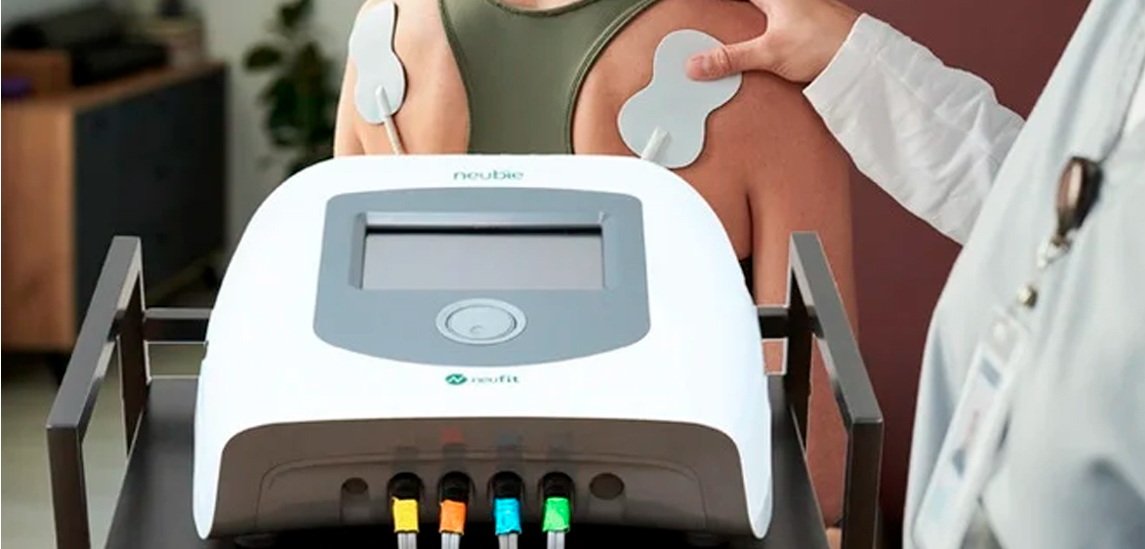
At Dr. Roy Nissim Chiropractic & Sports Medicine Center, we don't chase pain. We address the dysfunction that causes it, and the Neubie is one of the tools Dr. Roy uses to do that. The short version: it sends a small electrical current through pads on your skin while you move, to help retrain how your nerves and muscles work together.
What Is the Neubie Device, and What Can It Do for You?
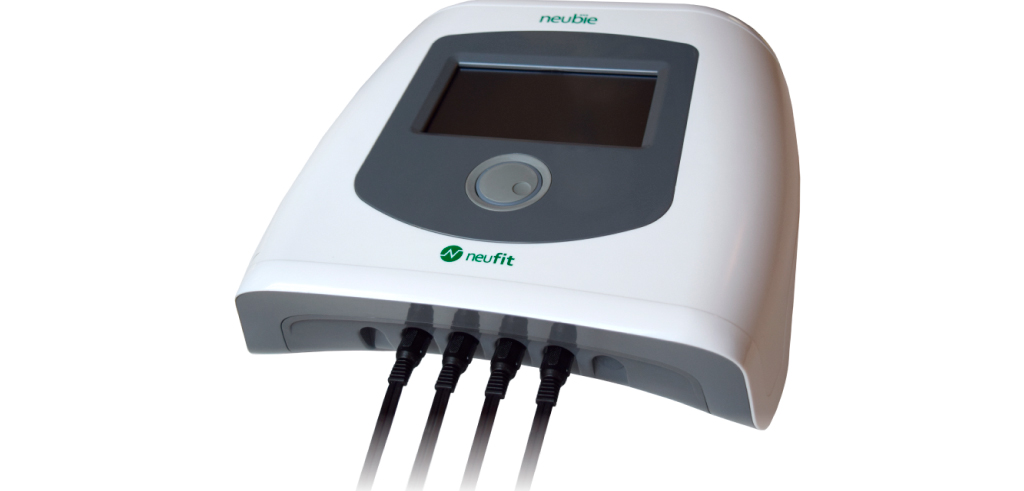
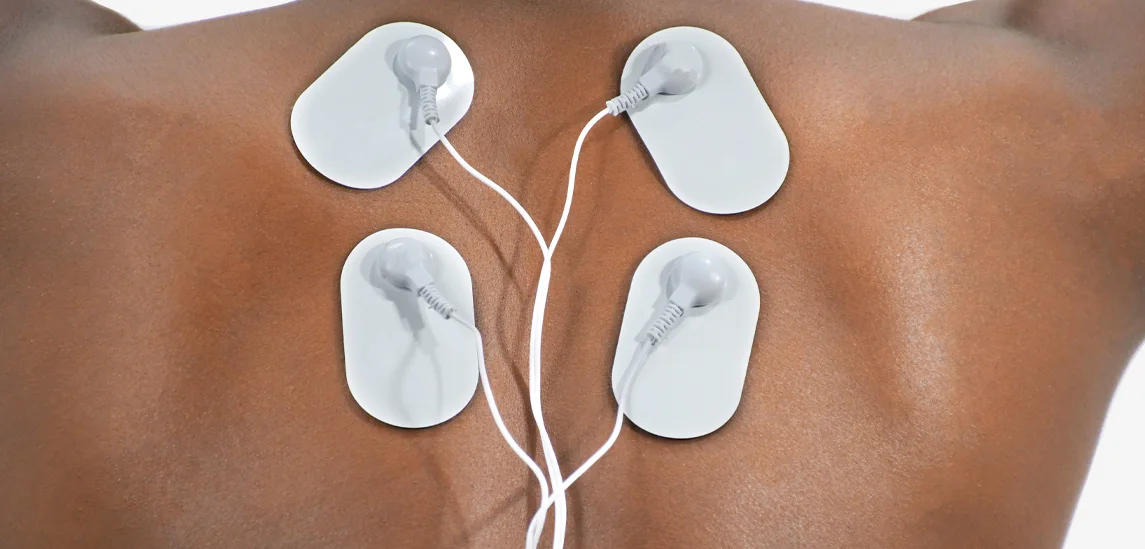
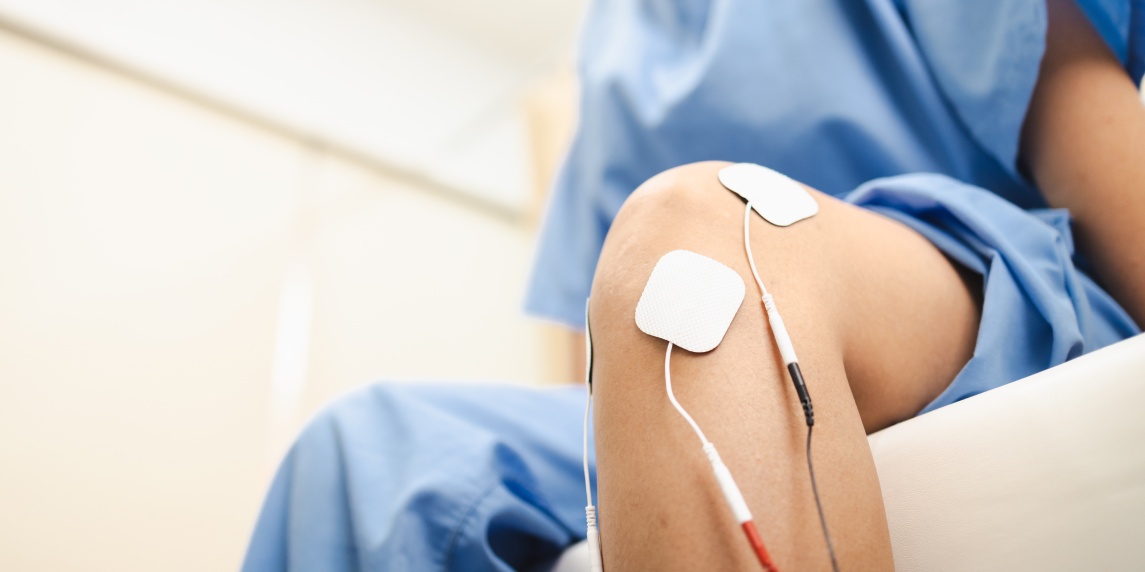
Neubie stands for neuro-bio-electric stimulator. By delivering pulsed, direct current through pads placed on your skin, this device provides a noninvasive way to combat the source of pain.
Dr. Roy uses Neubie therapy to help reduce pain, restore movement, and support recovery. NeuFit lists the Neubie as FDA-cleared for uses that include:
- Easing chronic pain, and pain after surgery or injury
- Keeping or regaining range of motion
- Retraining how your nerves and muscles work together
- Easing muscle spasms
- Increasing blood flow to the area being treated
- Preventing the muscle loss that comes with disuse
Those are the device's general uses, not a promise for every patient. Dr. Roy starts by finding the cause of your problem, then builds the treatment around it. If pain or stiffness keeps you off the golf course or out of your travel plans, he looks for what is causing it. He is a true Body Mechanic who works with everyone from top athletes to everyday movers.
TENS units are mainly used for pain relief, and EMS machines make muscles contract. The Neubie sits in the same family of devices, but for you the type of current matters less than how Dr. Roy uses it: he pairs it with an assessment of how you move and has you move during treatment. He compares all three in Neubie vs TENS vs EMS.
What Happens During a Neubie Session?
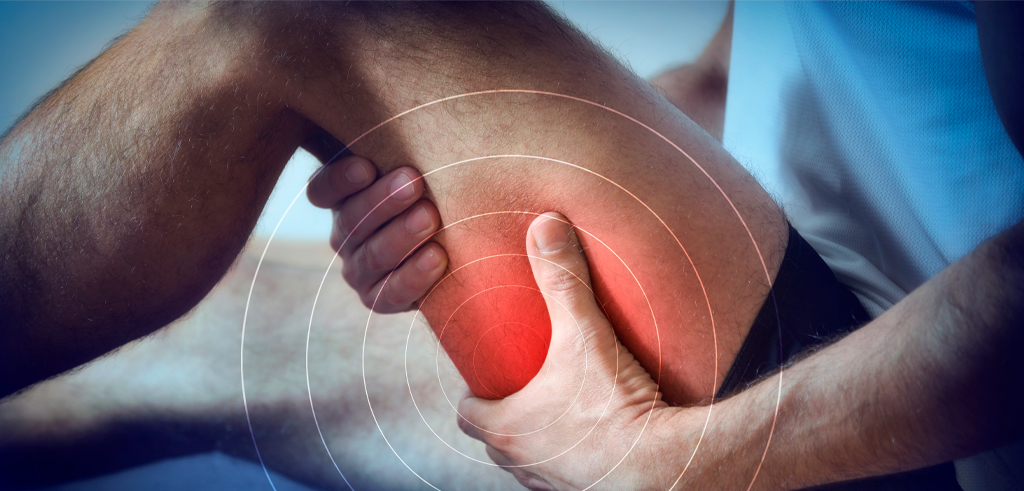
Your first visit starts with an assessment. Dr. Roy is a board-certified chiropractor and a certified Active Release Techniques® (ART®) practitioner. He looks at your symptoms, movement limits, injury history, and goals to find the root cause of your pain or limited mobility. Then he decides whether Neubie therapy may be able to help. You can get Neubie therapy in Santa Monica, and at the Thousand Oaks and Westlake Village clinics.
If Neubie is part of your plan, your session may look similar to the following:
| Step | What happens |
|---|---|
| 1. Evaluation | Dr. Roy reviews your symptoms, movement limits, injury history, and goals. |
| 2. Pad placement | Electrode pads go on specific areas based on your treatment plan. |
| 3. Movement | You do controlled movements or exercises while the stimulation is on. |
| 4. Added care | Dr. Roy may combine Neubie with chiropractic care, soft tissue work, or corrective exercise. |
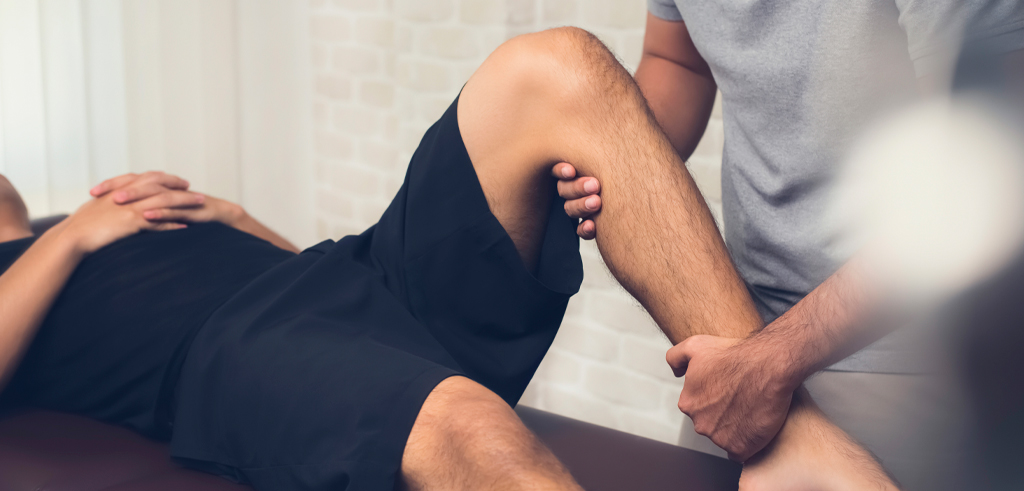
You are not a passive patient here. You move while the stimulation is on, so Dr. Roy can build it into an active rehabilitation plan. The goal is to make the treatment fit how you actually move.
Expect to feel the current. The intensity is adjustable, so tell Dr. Roy if anything is uncomfortable and he will change the settings. What you feel depends on the treatment area, the settings, and the movement you are doing, so say something if the sensation changes while you move.
How many sessions will you need? It depends. Your condition, how long you have had symptoms, your activity level, and how your body responds all shape the plan, so Dr. Roy reassesses your progress as you go.
Dr. Roy may use the Neubie if you have movement limits, muscle weakness, or a sports injury, or if you are recovering from an injury or surgery. Depending on your condition, Dr. Roy may pair it with ART or shockwave therapy. The clinic also offers PEMF and Class IV laser, which are separate treatments from the Neubie. Knee pain is one of the conditions Dr. Roy treats. If you are recovering from knee replacement surgery, his post on Neubie therapy for knee replacement recovery covers that situation.
What the Research Says and Who Should Ask First
Where the research stands
Research on the Neubie is still growing. In a 2023 study, seven people with multiple sclerosis used direct current stimulation together with movement retraining over six weeks. They attended 125 of 126 scheduled visits, and the authors reported trends toward improvement. The authors describe it as a pilot and say further research is warranted. NeuFit, the device's maker, helped fund the study and has registered further trials on low back pain and peripheral neuropathy. One small study can't predict how the Neubie will work for you, so Dr. Roy uses it as one tool in a larger rehabilitation plan, built around what he finds in your evaluation.
What to expect
Electrical stimulation isn't for everyone. Tell Dr. Roy about any implanted electrical device, such as a pacemaker, and about pregnancy, epilepsy, heart conditions, or cancer. Your answers help him decide at your evaluation whether stimulation is right for you and how to use it. If you are recovering from surgery, your surgeon should clear it first. If you have persistent pain, weakness, restricted movement, or an injury, stimulation on its own is no substitute for an evaluation.
Bring these questions to your evaluation:
- What is the Neubie meant to do in my plan?
- How will we tell whether it is working?
- Does my medical history change how you use it?
- When will you reassess the plan?
- Which other treatments in my plan work alongside it?
A Better Approach to Pain and Movement

Identify the pain. Correct the dysfunction. Reinforce the movement. That is how Dr. Roy approaches every patient, and the Neubie is one of the tools that may help him do it: easing pain, restoring movement, and getting your nerves and muscles working together. When you move better, you live better. The goal is for you to spend less time in the clinic and more time doing what you love.
Schedule an evaluation with Dr. Roy Nissim at any of his three clinics.